I Couldn't Wait! I Made My Own DREAM Steam Machine
By Paul Allen·

Based on video by Linus Tech Tips
Key Takeaways
- Linus Sebastian modernized a rare 2013 Valve Steam Machine prototype (one of only 300 made) with cutting-edge hardware
- The build features a Ryzen 7 9800X3D CPU and RX 9070 XT GPU, delivering significantly better performance than the upcoming official Steam Machine
- Thermal management proved challenging in the compact case, requiring custom ventilation modifications
- Consumer-grade hardware lacks proper CEC support, making seamless TV integration difficult unlike dedicated gaming consoles
- The project demonstrates that DIY solutions can exceed official hardware while maintaining upgradeability
Reviving Computing History
Linus Sebastian got his hands on prototype number 228 of Valve's original Steam Machine from 2013, one of just 300 units ever created. This piece of computing history was rescued from recyclers and had been waiting for the perfect moment to receive a modern hardware upgrade.
The original prototype came equipped with fourth-generation Intel Core processors, 16GB of DDR3 RAM, mechanical storage with an 8GB SSD cache, and Nvidia graphics—all powered by a 450W SFX power supply. However, Sebastian discovered that his particular unit had received some unofficial upgrades over the years, including a 512GB SSD manufactured two years after the original distribution.
Custom Case Modifications for Modern Hardware
Fitting contemporary components into the 2013 case design required careful modifications. The team faced a philosophical debate between preservationists who wanted to keep the historical case intact and those willing to make necessary changes for improved performance.
They settled on a compromise: the front, sides, and top would remain visually unchanged, while the bottom received strategically placed ventilation holes. Using a 3D scan of the case, they created a drilling jig to add airflow without compromising the aesthetic integrity or structural standoffs.
The original case featured several interesting design choices, including injection-molded parts (remarkable for such a limited production run), clipless GPU power connectors, and a custom CPU cooling shroud that directed fresh air directly to the processor while ignoring GPU ventilation entirely.
High-End Hardware in a Compact Package
Sebastian's modern build centers around a Ryzen 7 9800X3D processor—currently the fastest gaming CPU available. However, the extreme space constraints and cooling limitations suggested that a 7800X3D might be more practical for sustained performance in this form factor.
The system includes 32GB of G.Skill DDR5-6000 memory, a 1TB Crucial P5 Plus NVMe SSD, and an ASRock B650E PG ITX Wi-Fi motherboard. The graphics card choice was particularly strategic: an RX 9070 XT, which represents the most powerful current-generation GPU with out-of-the-box Steam OS compatibility.
A Corsair SF850 850W power supply provides ample power for the high-end components, though cable management in the tiny case proved challenging. Custom shrouds and creative routing were necessary to make everything fit while maintaining some semblance of airflow.
Performance Results and Thermal Challenges
The completed system delivers impressive gaming performance, easily running Cyberpunk 2077 at 4K with ray tracing enabled. Even with the thermal constraints, the CPU maintained temperatures around 74°C under gaming loads, while the GPU operated at its full 300W power limit at 70°C.
The cooling solution proved more effective than expected, successfully separating heat paths with CPU exhaust flowing out one side and GPU heat exiting through the newly added bottom ventilation. However, the system runs notably louder than the official Steam Machine would, trading acoustics for substantially better performance.
In less demanding titles, the system achieved casual frame rates of 400+ FPS, demonstrating the massive performance advantage over both the original 2013 hardware and the upcoming official Steam Machine.
Steam OS Integration and Limitations
The build runs Steam OS using the beta branch to support the newest GPU hardware. While most gaming features work seamlessly through Valve's Proton compatibility layer, some console-like conveniences remain elusive.
The major limitation involves Consumer Electronics Control (CEC) functionality, which would allow the controller to wake the system and enable automatic TV input switching. Consumer GPUs lack proper CEC support, and while third-party solutions exist, they require significant technical expertise and don't work reliably across different TV models.
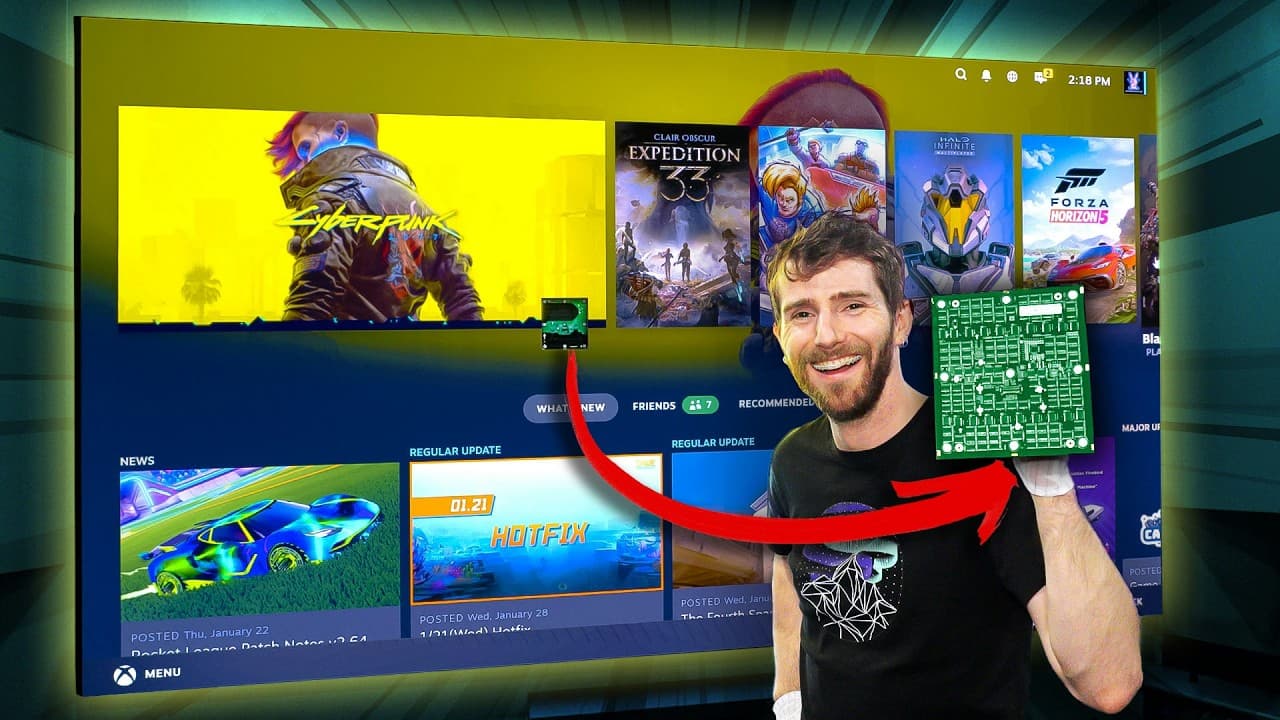
Sebastian discovered that Valve built special circuitry into their official controllers to handle power management, going beyond standard wake-on-USB functionality. This level of integration isn't easily replicated with standard PC hardware.
The Verdict: Power vs. Convenience
The DIY Steam Machine significantly outperforms Valve's upcoming official hardware while maintaining the upgradeability that made the original Steam Machine concept appealing. However, it sacrifices some of the seamless console-like experience that dedicated gaming hardware can provide.
For enthusiasts willing to trade some convenience for raw performance and customization options, Sebastian's approach proves that the Steam Machine concept remains viable—it just requires accepting the compromises inherent in using standard PC components in a living room gaming context.
The project serves as both a tribute to Valve's original vision and a demonstration of how far PC gaming hardware has advanced in the decade since the first Steam Machine prototypes were distributed.
Our Analysis
While this custom Steam Machine demonstrates impressive performance capabilities, it highlights a fundamental market timing disconnect that Valve likely anticipated when discontinuing the original program in 2017. The $2,500+ cost of replicating this build with current hardware prices positions it directly against established console ecosystems that offer superior optimization and developer support at half the price.
The thermal and acoustic compromises reveal deeper architectural limitations that dedicated gaming appliances solve more elegantly. Sony's PS5 Pro and Microsoft's upcoming Xbox Series X refresh both deliver comparable 4K gaming performance while maintaining whisper-quiet operation through purpose-built cooling systems and custom silicon optimizations. These consoles also provide guaranteed 10-year software support lifecycles, something no DIY Steam Machine can match as component manufacturers discontinue drivers and BIOS updates.
More critically, the project overlooks the enterprise integration challenges that killed Steam Machines commercially. Major game publishers like EA, Ubisoft, and Activision have actually reduced Linux compatibility since 2013, with anti-cheat systems like BattlEye and EasyAntiCheat creating new barriers despite Proton improvements. Current market data shows only 1.96% of Steam users run Linux natively, compared to 2.29% in 2014, indicating the platform momentum moved toward Windows despite SteamOS advances.
The CEC integration problems mentioned represent a broader ecosystem fragmentation that console manufacturers solved through vertical integration. Apple's approach with Apple TV gaming demonstrates how seamless living room experiences require controlling both hardware and software stacks completely. DIY solutions inevitably compromise on these invisible but essential user experience elements that determine long-term adoption success, regardless of raw performance metrics.
Frequently Asked Questions
Q: What makes this Steam Machine different from the official one?
The DIY build uses significantly more powerful hardware—a Ryzen 7 9800X3D and RX 9070 XT compared to the official Steam Machine's more modest specs. This translates to dramatically better gaming performance, though at the cost of higher noise levels and some integration conveniences.
Q: Can I build my own Steam Machine?
Yes, anyone can build a Steam Machine by installing Steam OS on compatible PC hardware. The main challenges are finding a compact case suitable for living room use and ensuring your GPU has good Linux/Steam OS driver support. AMD GPUs generally work better out of the box than Nvidia.
Q: Why doesn't CEC work with PC hardware?
Consumer Electronics Control (CEC) requires specific hardware support that consumer GPUs don't include. Enterprise and professional display adapters sometimes support it, but they're expensive and not designed for gaming. This is one area where consoles maintain a significant advantage.
Q: Is Steam OS ready for everyday use?
For gaming, Steam OS is quite mature thanks to Valve's work on the Steam Deck. Most games work well through Proton compatibility. However, for general computing tasks or games with aggressive anti-cheat systems, Windows may still be necessary.
Products Mentioned
High-performance gaming CPU with 3D V-Cache technology
Current-generation GPU with excellent Steam OS compatibility
High-speed memory kit for gaming builds
Fast storage for game libraries
Compact Mini-ITX motherboard for small form factor builds
High-wattage power supply in compact SFX form factor
Links to products may be affiliate links. We may earn a commission on purchases.
Share this article
Enjoyed this article?
Get more from Linus Tech Tips delivered to your inbox.