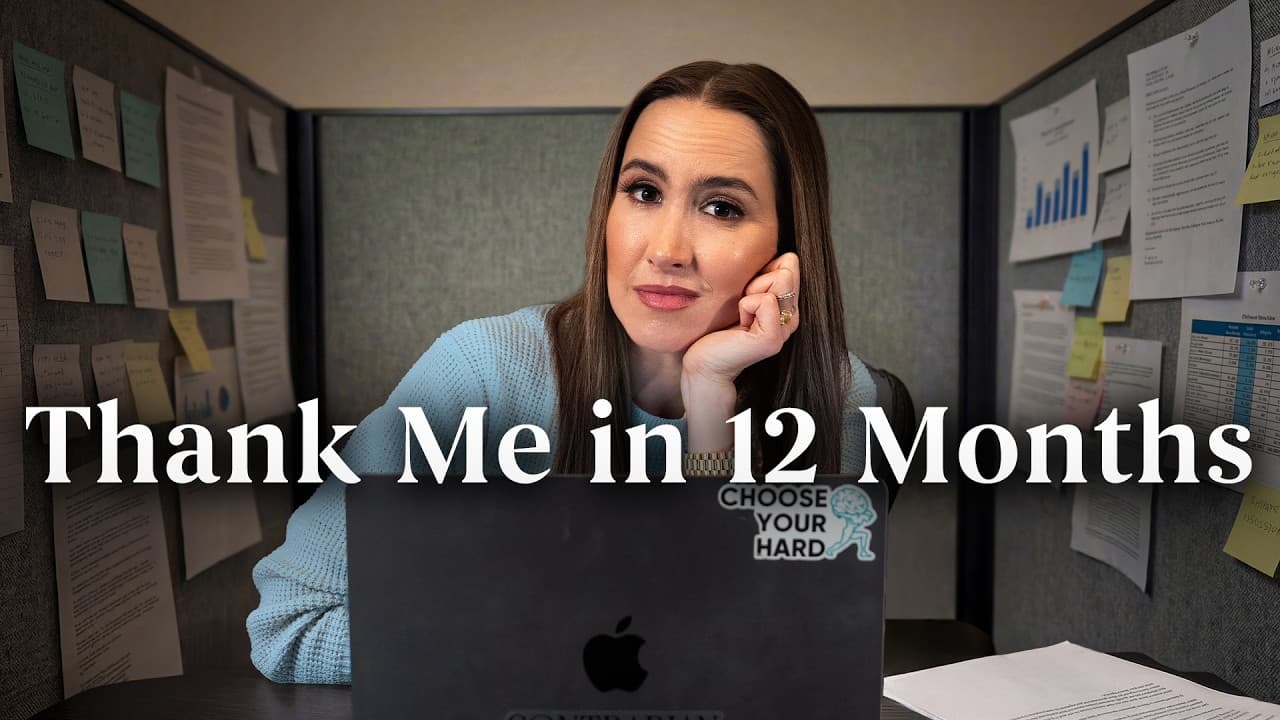
The U.S. Government is Literally Paying People to Start Businesses in 2026
By Paul Allen·

Based on video by Codie Sanchez
Key Takeaways
- Over $50 billion in government small business funding went unused in 2023, with more than 30% remaining unclaimed
- State business incentive programs exist nationwide, offering tax credits, wage reimbursements, and training grants across all political affiliations
- Strategic business entity selection (S-Corp vs LLC) can save entrepreneurs tens of thousands annually in self-employment taxes
- The QSBS (Qualified Small Business Stock) provision allows up to $10 million in tax-free capital gains per person when selling qualifying businesses
- Government-backed SBA loans offer significantly lower interest rates than traditional business credit, with some requiring as little as 10% down payment
- Business education and professional development expenses are tax-deductible for legitimate business owners
The Hidden Reality of Government Business Support
Codie Sanchez reveals a striking contradiction in American business funding: while entrepreneurs constantly complain about government obstacles, billions in available support programs remain unused each year. The reality is that federal and state governments actively incentivize small business creation and growth through a complex network of grants, loans, tax credits, and training programs that most business owners never discover.
This disconnect stems from a fundamental misunderstanding of government priorities. Small businesses represent 99% of all American companies and create two-thirds of new jobs. Politicians recognize that employed voters are satisfied voters, making small business support a bipartisan priority that transcends red state versus blue state politics.
State Business Incentive Programs: Money Waiting to Be Claimed
Every state operates its own economic development agency with specific programs designed to attract and retain businesses. These aren't theoretical concepts—they're active programs with real money attached.
Workforce Training and Hiring Credits
Sanchez highlights several concrete examples of state-specific programs:
Texas offers up to $500,000 through the Texas Workforce Commission for workforce training initiatives. Indiana provides $5,000 per full-time hire plus 50% reimbursement on training costs. Florida incentivizes rural development with $1,000 to $5,000 per job created in rural areas. Tennessee reimburses 50% of payroll costs in high-poverty areas, while New York returns 75% of employee training expenses in clean energy sectors.
These programs operate on a simple principle: states compete for business investment and job creation. Economic development agencies have budgets specifically allocated for business incentives, and they're evaluated based on how effectively they deploy these resources.
Application Process Demystified
Accessing these programs requires understanding the system rather than navigating complex bureaucracy. The process typically involves three straightforward steps:
- Research state economic development incentives using terms like "workforce training credit," "job tax credit," or "capital investment reimbursement"
- Complete online applications that typically require less than 30 minutes
- Submit basic documentation including payroll records and expansion plans
The critical requirement is timing—most programs require application before hiring or expansion begins, not after the fact.
SBA Loans: Government-Backed Business Acquisition
Sanchez shares a compelling example of how government financing can replace private investment. When she was preparing to invest hundreds of thousands in a nail and hardware business, the owners discovered they qualified for SBA financing instead. This arrangement allowed them to maintain 100% ownership while accessing capital at government-subsidized rates.
The Small Business Administration offers multiple loan programs designed specifically for business acquisition and expansion. These loans typically require 10% down payment and offer interest rates significantly below commercial lending rates. More importantly, they're structured as debt rather than equity, meaning entrepreneurs retain full ownership of their businesses.
Historical Context of Government Business Support
This system isn't accidental—it emerged from specific historical challenges. During the Great Depression, small businesses faced potential extinction, prompting government intervention that saved over 110,000 businesses through grants and loans. Post-World War II, policymakers recognized that corporate monopolies posed political and economic risks, leading to deliberate programs supporting small business competition.
The modern result is a complex ecosystem where government actively counterbalances entrepreneurial risk through financial incentives. This represents a calculated political strategy: supporting small businesses creates jobs, employed citizens vote, and diverse business ownership prevents excessive corporate concentration.
Tax Strategy: QSBS and Strategic Entity Selection
Sanchez's experience with Qualified Small Business Stock (QSBS) demonstrates how tax policy rewards entrepreneurial risk-taking. Through this provision, she avoided taxes on $300,000 in gains from selling Open Fortune, a fortune cookie advertising company.
Understanding QSBS Requirements
QSBS allows entrepreneurs to exclude up to 100% of capital gains from federal taxes, with limits of $10 million or 10 times the original investment per person. The requirements include:
- Original shares in a U.S. C-Corporation
- Company must be actively operating (not passive investment)
- Five-year minimum holding period
- Business must meet specific operational criteria
This provision can be strategically leveraged by family members, effectively multiplying the tax-free potential. A married couple can each claim $10 million in QSBS benefits, creating $20 million in potential tax-free gains.
S-Corp Election for Tax Efficiency
Entity selection dramatically impacts tax liability for profitable businesses. Sanchez illustrates this with a founder earning $500,000 annually through a sole proprietorship LLC, who faces 15.3% self-employment tax on the entire amount—approximately $76,500 annually.
By electing S-Corp status and paying themselves a $150,000 reasonable salary, they limit payroll taxes to that amount while taking the remaining $350,000 as distributions exempt from self-employment tax. This single change saves approximately $53,550 annually in federal taxes.
Advanced Tax Credit Strategies
Beyond basic entity optimization, multiple tax credit programs reward specific business activities:
Work Opportunity Tax Credit (WOTC)
Employers receive $2,400 to $9,600 in tax credits for hiring from qualifying groups including veterans, long-term unemployed individuals, and other specified categories. The application process requires completing forms before or on the employee's start date.
Section 179 Deduction
This provision allows immediate expensing of up to $1.25 million in equipment purchases rather than depreciating over multiple years. Importantly, this applies even to financed equipment, providing immediate tax benefits for necessary business investments.
Historic Rehabilitation Credit
Businesses investing in historic building renovations receive 20% tax credits on qualifying expenses. This program particularly benefits businesses expanding into older commercial districts while supporting community development goals.
New Markets Tax Credit
Investments in low-income communities can generate up to 39% in tax credits through Community Development Entities (CDEs). This program combines social impact with significant tax benefits for qualifying businesses.
Practical Implementation Example
Sanchez provides a comprehensive example using an HVAC business acquisition:
- Hiring a veteran generates up to $9,600 through WOTC
- Purchasing trucks and equipment worth $75,000 qualifies for immediate Section 179 deduction
- Renovating a historic building triggers 20% rehabilitation credits
- Expanding into low-income areas provides access to New Markets Tax Credit financing
This combination transforms a traditional service business into what Sanchez calls "a tax-efficient cash printer" by strategically utilizing available government incentives.
Research and Development Credits
Even unprofitable companies can claim R&D credits up to $250,000 annually. Major corporations like Google and Microsoft spend billions on research and development while claiming full tax deductions. These same provisions apply to small businesses investing in product development, software creation, or process improvement.
Strategic Debt vs. Consumer Debt
Sanchez emphasizes the critical distinction between strategic business debt and consumer debt. While credit cards charge 14-18% interest, SBA loans offer rates as low as 2-13% depending on the program. State-sponsored programs in Pennsylvania, Ohio, and Illinois provide even lower rates of 2-5% for qualifying businesses.
Micro-loans through the SBA provide up to $50,000 with no down payment requirement, making them ideal for equipment purchases or working capital needs. This strategic approach to leverage allows entrepreneurs to preserve personal capital while accessing necessary business resources.
The Importance of Professional Guidance
Throughout her presentation, Sanchez repeatedly emphasizes the need for qualified tax and legal professionals. These programs, while legitimate and valuable, require proper implementation to avoid compliance issues. The difference between tax optimization and tax fraud often lies in proper documentation and adherence to program requirements.
Business owners should work with CPAs familiar with small business tax credits and attorneys experienced in entity selection and business acquisitions. The upfront investment in professional guidance typically pays for itself many times over through properly claimed benefits.
Beyond Individual Programs: Systematic Thinking
The most successful entrepreneurs don't pursue individual programs in isolation—they develop systematic approaches to leveraging available resources. This includes:
- Regular consultation with tax professionals to identify new opportunities
- Strategic timing of major business decisions to maximize tax benefits
- Entity selection that optimizes for current and future tax situations
- Documentation systems that support credit and deduction claims
Our Analysis
While Sanchez presents an optimistic view of untapped government funding, recent 2025 appropriations data reveals a more nuanced reality that potential entrepreneurs should understand. The Infrastructure Investment and Jobs Act has redirected approximately $23 billion from traditional small business programs toward green infrastructure startups, creating intense competition for remaining funds. This shift means that businesses in traditional sectors—retail, hospitality, and conventional manufacturing—now face significantly longer approval times and stricter qualification criteria than clean energy or infrastructure-related ventures.
The timing paradox presents another critical limitation not addressed in the original analysis. While $50 billion may technically go "unused," this figure includes funds that are allocated but not yet distributed due to multi-year vetting processes. Recent Government Accountability Office reports show that 67% of "unused" SBA funds are actually committed to applications under review, with average processing times extending to 8-14 months for loans above $500,000. This creates a cash flow challenge that contradicts the notion of readily available capital.
International comparisons provide additional context missing from the domestic focus. Germany's Mittelstand program and Singapore's Startup SG initiative offer more streamlined access to government funding, typically processing applications within 60-90 days. These programs also provide ongoing mentorship and market access that U.S. programs largely omit, suggesting that while American funding amounts may be larger, the ecosystem support remains fragmented.
For first-time entrepreneurs specifically, the regulatory compliance burden associated with government funding creates hidden costs. Tax attorney data from 2025 indicates that businesses utilizing multiple state incentive programs spend an average of $15,000-$25,000 annually on compliance and reporting requirements—a significant expense that can erode the financial benefits for smaller operations generating less than $1 million in annual revenue.
Frequently Asked Questions
Q: How do I find state business incentive programs in my area?
Start by searching "[your state] economic development incentives" or visit your state's official economic development website. Look for programs with names containing "workforce training credit," "job tax credit," or "capital investment reimbursement." Most states have dedicated small business liaisons who can guide you through available programs. You can also contact your local Small Business Development Center (SBDC) for personalized assistance in identifying relevant programs.
Q: What's the difference between QSBS and regular capital gains treatment?
QSBS (Qualified Small Business Stock) allows you to exclude up to 100% of capital gains from federal taxes when selling qualifying small business stock, with limits of $10 million or 10 times your investment per person. Regular capital gains are taxed at 0%, 15%, or 20% depending on your income level. QSBS requires holding original shares in a qualifying U.S. C-Corporation for at least five years, while the business must be actively operating and meet specific criteria. This can result in millions of dollars in tax savings compared to standard capital gains treatment.
Q: Should I switch from LLC to S-Corp election for tax savings?
S-Corp election can provide significant tax savings for profitable businesses by reducing self-employment taxes. However, it also creates additional complexity including payroll requirements, reasonable salary obligations, and more complex tax filings. Generally, businesses earning over $60,000 annually may benefit from S-Corp election, but the break-even point depends on your specific situation. Consult with a qualified CPA to analyze your particular circumstances, as factors like state taxes, business type, and growth plans all influence the optimal choice.
Q: Are SBA loans really easier to get than traditional business loans?
SBA loans aren't necessarily easier to qualify for, but they offer more favorable terms including lower down payments (often 10% vs. 20-30% for conventional loans), longer repayment periods, and below-market interest rates. The SBA guarantee reduces lender risk, making them more willing to work with small businesses. However, SBA loans involve more paperwork and longer processing times. They're particularly valuable for business acquisitions, equipment purchases, and working capital when you want to preserve equity and minimize personal investment.
Products Mentioned
- Beehiv Newsletter Platform - Email newsletter platform that connects content creators with advertisers and helps grow audiences
- Codie Sanchez Boardroom Program - Business consulting and mentorship program focused on business acquisition and growth strategies
- Main Street Millionaire Live Conference - Educational event featuring real business acquisition deals and deal structuring workshops
Products Mentioned
Email newsletter platform that connects content creators with advertisers and helps grow audiences
Business consulting and mentorship program focused on business acquisition and growth strategies
Educational event featuring real business acquisition deals and deal structuring workshops
Links to products may be affiliate links. We may earn a commission on purchases.
Share this article
Enjoyed this article?
Get more from Codie Sanchez delivered to your inbox.