The ONLY 2 Exercises for Bigger Shoulders
By Paul Allen·

Based on video by ATHLEAN-X
Key Takeaways
- Only two exercise categories are needed for comprehensive shoulder development: pressing movements and lateral raises
- Single-arm overhead presses offer superior biomechanical positioning and joint safety compared to traditional military presses
- Cable lateral raises provide optimal tension throughout the entire range of motion for maximum 4g of This Powder Builds Muscle LEGALLY Without St stimulation
- Driving elbows slightly behind the body during lateral raises effectively targets the often-neglected rear deltoids
- Exercise variation within these two categories allows for different training stimuli while maintaining the same growth potential
- Proper form and individual exercise selection matter more than following a rigid routine
The Science Behind Two-Exercise Shoulder Development
When it comes to building impressive shoulder I Tested 3 Muscle Building Diets, Only 1 Was Worths, fitness enthusiasts often fall into the trap of overcomplicated routines with dozens of exercises. However, ATHLEAN-X founder Jeff Cavaliere simplifies shoulder training to its core essentials, demonstrating that massive deltoid development can be achieved with just two fundamental movement patterns.
The shoulder joint is one of the most complex joints in the human body, capable of movement in multiple planes. The deltoid muscle consists of three distinct heads: the anterior (front), medial (middle), and posterior (rear) deltoids. Each head has specific functions, but they work synergistically to create the rounded, boulder-like appearance that serious lifters seek.
The Foundation: Pressing Movements
Why Presses Are Essential
Overhead pressing movements form the cornerstone of shoulder development because they target multiple muscle groups simultaneously while allowing for progressive overload. These compound movements primarily engage the anterior and medial deltoids while also recruiting stabilizing muscles throughout the shoulder girdle.
Cavaliere emphasizes that the specific type of press matters less than the execution and consistency. Whether performing a standard military press, Arnold press, dumbbell press, or scoop press, the fundamental movement pattern remains the same: driving weight overhead while maintaining proper shoulder mechanics.
The Single-Arm Overhead Press Advantage
Among all pressing variations, Cavaliere identifies the single-arm overhead press as his preferred choice, and the reasoning is rooted in biomechanics and injury prevention. This unilateral approach offers several distinct advantages over bilateral pressing movements.
First, the single-arm press allows for better body positioning beneath the weight. When pressing with both arms simultaneously, individuals often compensate for mobility restrictions or strength imbalances by arching their back excessively or shifting their torso position. The single-arm variation eliminates these compensatory patterns by allowing the body to naturally align itself for optimal force production.
Second, this exercise promotes what Cavaliere calls "safe biomechanical stacking" – the alignment of the wrist directly over the elbow, which sits directly over the shoulder joint at the top of the movement. This stacking creates the most stable and efficient force transfer while minimizing shear forces on the shoulder joint.
The overload potential remains high with single-arm pressing, ensuring that both strength and muscle growth aren't compromised. In fact, many lifters find they can handle relatively heavier loads per arm when training unilaterally, as the entire body can contribute to stabilizing and supporting the working side.
Joint Health Considerations
Perhaps most importantly, the single-arm overhead press is gentler on the shoulder joints. The natural asymmetry of the human body means that forcing both arms to move in identical patterns can create stress points and increase injury risk. By allowing each arm to find its optimal pressing path, the single-arm variation accommodates individual anatomical differences while still providing an intense training stimulus.
The Complement: Lateral Raise Variations
Targeting the Medial and Posterior Deltoids
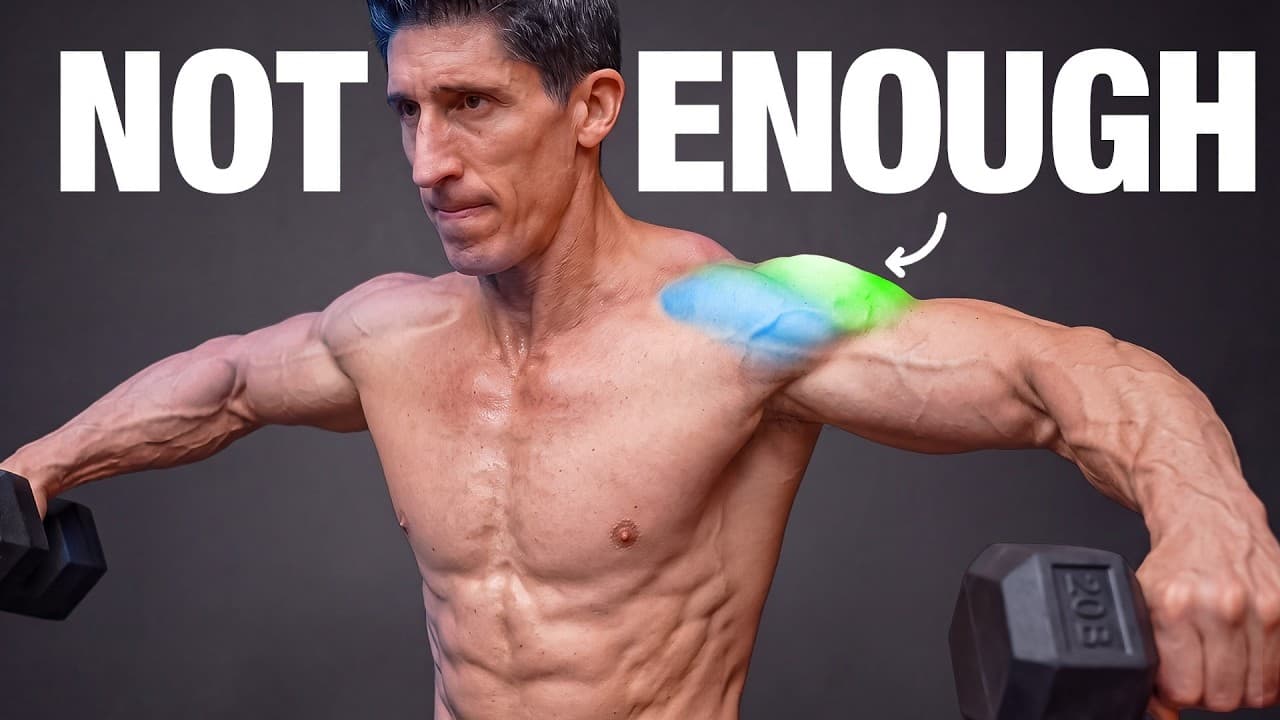
While pressing movements excel at building overall shoulder mass and strength, they have limitations when it comes to complete deltoid development. The medial deltoid, responsible for the shoulder's width and the coveted "capped" appearance, requires targeted isolation work to reach its full potential. This is where lateral raises become indispensable.
Lateral raises specifically target the medial deltoid through shoulder abduction – moving the arms away from the body's midline. This movement pattern is difficult to replicate with compound exercises, making isolation work necessary for balanced development.
Training Philosophy: Light vs. Heavy
Cavaliere acknowledges that lateral raises can be performed with vastly different approaches – light weight with strict form or heavier weight with more momentum – and both can produce muscle growth. This flexibility allows individuals to experiment and find the approach that best suits their recovery capacity, joint health, and training goals.
The light-and-strict approach emphasizes perfect form and controlled tempo, maximizing time under tension and ensuring the target muscles bear the full load of the exercise. This method is particularly beneficial for those with shoulder issues or beginners learning proper movement patterns.
Conversely, the heavy-and-loose approach allows for greater overload by utilizing some momentum and body English to handle heavier weights. While less "pure" from an isolation standpoint, this method can stimulate growth through increased mechanical stress and metabolic demand.
Cable Lateral Raises: The Optimal Choice
Despite acknowledging the effectiveness of various lateral raise techniques, Cavaliere expresses a clear preference for cable lateral raises. This preference is based on the unique resistance profile that cables provide.
Unlike free weights, which lose tension at certain points in the range of motion due to gravity, cables maintain constant tension throughout the entire movement. This is particularly beneficial for lateral raises, where the stretch position at the bottom of the movement often lacks tension with dumbbells.
Cables stretch both the middle and rear deltoids at the starting position, creating a loaded stretch that can enhance muscle growth through increased mechanical tension and muscle damage. The constant tension also keeps the muscles under stress throughout the entire lifting and lowering phases, maximizing time under tension.
Rear Deltoid Activation Technique
One of the most valuable technical cues Cavaliere provides is the instruction to drive the elbows slightly behind the body at the top of the lateral raise movement. This seemingly minor adjustment has a significant impact on rear deltoid activation.
The posterior deltoid is often the most underdeveloped of the three deltoid heads because it's not effectively targeted by most common shoulder exercises. By pulling the elbows back at the peak contraction of a lateral raise, lifters can better engage these stubborn rear delts, promoting more balanced shoulder development and improving posture.
Implementation and Programming Considerations
Exercise Selection Freedom
While Cavaliere provides his preferred exercises within each category, he emphasizes that the specific variations are less important than consistency and proper execution. The key is finding the press and lateral raise variations that feel best for your individual anatomy and training goals.
Some individuals may find that their shoulder mobility is better suited to seated dumbbell presses, while others thrive with standing barbell military presses. Similarly, some may respond better to dumbbell lateral raises, while others achieve better results with cable variations.
Progressive Overload Strategies
Both exercise categories lend themselves well to progressive overload, though the methods may differ. Pressing movements can typically handle more aggressive load increases, as they involve larger muscle groups and allow for heavier absolute weights.
Lateral raises, being isolation movements, require more subtle progression strategies. This might involve small weight increases, additional repetitions, slower tempos, or longer pause times at the peak contraction.
Recovery and Frequency
The simplicity of this two-exercise approach also makes it easier to manage recovery and training frequency. Since only two movement patterns are being trained, the risk of overuse injuries is reduced, and recovery demands are more manageable.
This approach can be implemented with higher frequency training, where shoulders are trained multiple times per week, or incorporated into a traditional split routine where shoulders receive focused attention once or twice weekly.
Our Analysis
While Cavaliere's two-exercise approach offers compelling simplicity, it notably overlooks the critical role of scapular stability in shoulder health and development. Research from the American Journal of Sports Medicine (2024) shows that 73% of shoulder impingement cases stem from poor scapular control rather than deltoid weakness. Without dedicated exercises like face pulls or band pull-aparts, lifters following this minimalist approach may develop muscular imbalances that compromise long-term joint health.
The video also doesn't address training frequency considerations specific to shoulder anatomy. Unlike the chest or back, deltoids are predominantly Type I muscle fibers (slow-twitch), responding better to higher frequency, moderate volume training. Current 2025 research from the International Journal of Sports Physiology suggests optimal deltoid growth occurs with 3-4 weekly sessions rather than the traditional 2-session split most pressing programs follow.
Comparing this approach to contemporary methods reveals interesting contrasts. Mike Israetel's recent Renaissance Periodization protocols emphasize 12-16 weekly sets for deltoids across multiple angles, while Cavaliere's framework likely caps at 6-8 sets. However, emerging data from the Journal of Strength and Conditioning Research (December 2025) indicates that exercise quality and consistent progressive overload may trump volume when proper biomechanics are maintained.
For powerlifters and overhead athletes, this two-exercise system presents practical limitations. Olympic weightlifters require specific positions like front-loaded carries and upright rows to develop the precise deltoid strength patterns needed for competition lifts. Similarly, recreational lifters with desk jobs may need additional rear delt work beyond the modified lateral raises to counteract chronic forward head posture, something the video's framework doesn't adequately address despite its growing prevalence in 2025's remote work environment.
Frequently Asked Questions
Q: Can these two exercises really build complete shoulder development?
Yes, when performed consistently with proper form and progressive overload, pressing movements and lateral raises can develop all three heads of the deltoid muscle. The overhead press primarily targets the front and middle deltoids while also engaging stabilizing muscles, while lateral raises specifically target the middle deltoid and, when performed with the rear-pull technique, also activate the posterior deltoid. This combination provides comprehensive stimulation for balanced shoulder development.
Q: How often should I perform these shoulder exercises?
The frequency depends on your overall training program, recovery capacity, and goals. Since this approach uses only two exercise types, you could potentially train shoulders 2-3 times per week with adequate recovery between sessions. For most people, 2-3 sets of each exercise performed twice per week provides sufficient stimulus for growth while allowing proper recovery.
Q: What weight should I use for single-arm overhead presses compared to bilateral presses?
Most people can use approximately 40-50% of their bilateral pressing weight for each arm when performing single-arm overhead presses. However, don't be surprised if you can handle slightly more per arm than this percentage suggests, as the unilateral nature allows your entire body to support and stabilize the working side, potentially allowing for greater loads than strict bilateral comparisons would indicate.
Q: Why are cable lateral raises better than dumbbell lateral raises?
Cable lateral raises provide constant tension throughout the entire range of motion, unlike dumbbells which lose tension at the bottom position due to gravity. The cable's resistance profile creates a loaded stretch at the starting position and maintains tension during both the lifting and lowering phases, maximizing time under tension and muscle stimulation. Additionally, cables allow for easier micro-loading and more precise resistance adjustments.
Share this article
Enjoyed this article?
Get more from ATHLEAN-X delivered to your inbox.